
AI search, AEO and GEO:
what global firms report
How AI search is changing the way people find information and visit websites, compared across reports from global consulting and research firms. Every figure comes from the original report, and each brief adds what it means for companies.
Key findings by firm
| Firm | Report | Published | Key finding | Brief |
|---|---|---|---|---|
| Deloitte | The age of Generative Engine Optimisation (GEO): How brand discovery has changed and what you must do now | 2026-09-02 | GEO aims for selection inside AI answers, across 4 pillars: technical, SEO, content, brand | Read |
| Boston Consulting Group | The Algorithm Now Makes the Shortlist | 2026-09 | In six European markets, 23% of AI users changed their banking or insurance provider choice due to AI | Read |
| Accenture | Talk to my AI agent: The new rules of brand value | 2026-06-03 | 74% in 16 countries would trust a personal AI agent over their best friend to buy for them | Read |
| McKinsey & Company | New front door to the internet: Winning in the age of AI search | 2025-10-16 | Half of 1,927 US consumers seek out AI search; unprepared brands may lose 20-50% of traditional search traffic | Read |
| Bain & Company | Goodbye Clicks, Hello AI: Zero-Click Search Redefines Marketing | 2025-02-19 | ~80% rely on zero-click results in 40%+ of searches; organic traffic cut an estimated 15-25% | Read |
| Gartner | Gartner Predicts Search Engine Volume Will Drop 25% by 2026, Due to AI Chatbots and Other Virtual Agents | 2024-02-19 | Traditional search engine volume predicted to drop 25% by 2026 (February 2024 prediction, not measured) | Read |
Three things the reports agree on
Discovery is moving into AI answers
The reports agree that a growing share of people now look for products, services and information by asking AI tools, and that many searches end without a click to a website.
Brand-owned pages are a small share of what AI cites
AI answers draw on many third-party sources. A company cannot control those, but it can keep its own official information accurate, consistent and easy for AI to read.
Measure it, rather than guess
Few organizations track how they appear in AI answers. Asking the same questions repeatedly and comparing results over time is the starting point.
Report briefs by firm
-
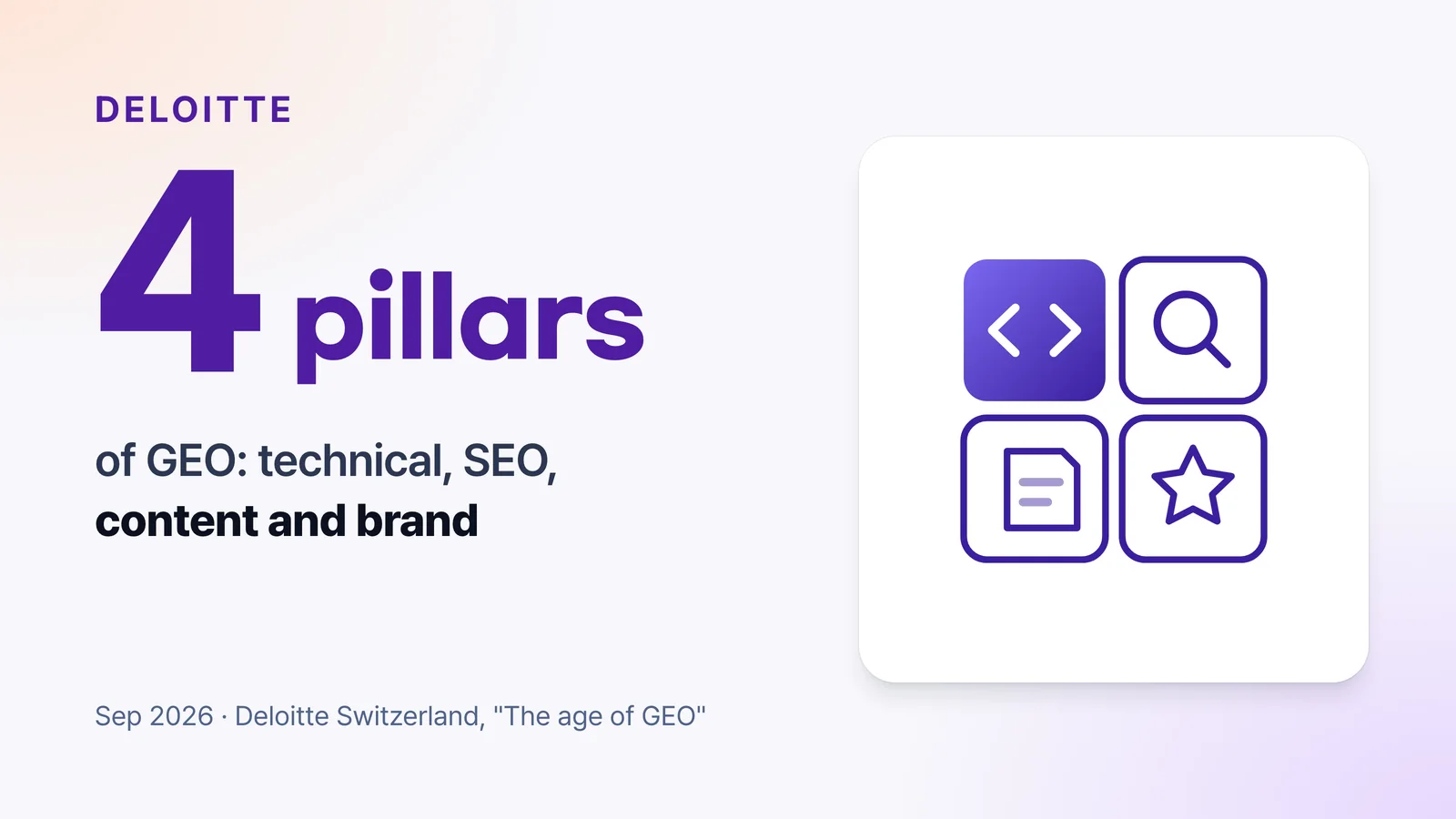
How does Deloitte define GEO, and how does it say to put it into practice?
Deloitte Switzerland's The age of GEO (September 2026) and Deloitte Belgium's GEO e-book: how Deloitte defines GEO, its four pillars, four stages and measures.
-
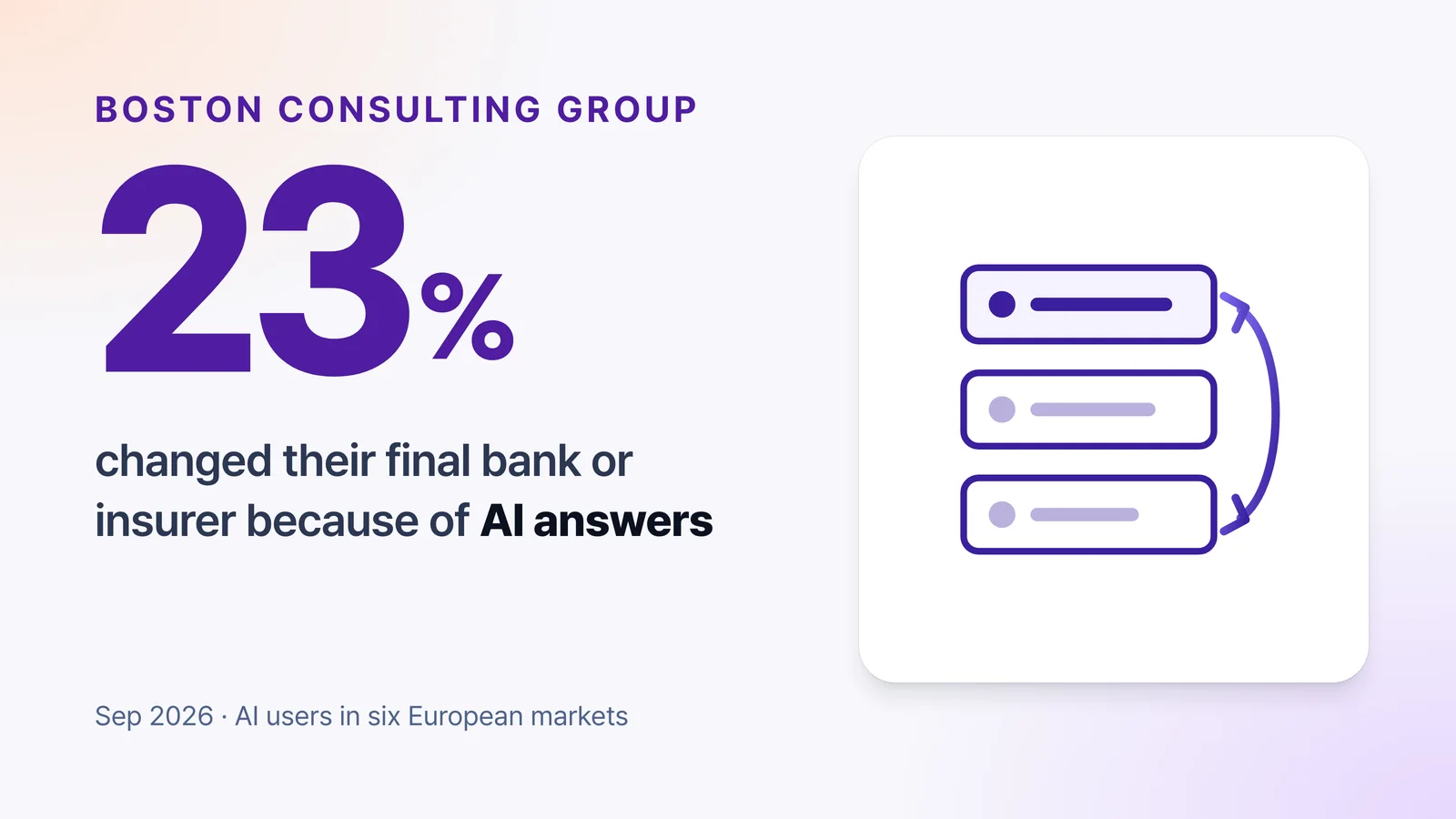
What does BCG say AI changes about how consumers find and shortlist brands?
BCG's The Algorithm Now Makes the Shortlist (September 2026) and CMO Survey 2026: how AI shapes consumer shortlists, how to measure GEO and AEO, and what to check now.
-
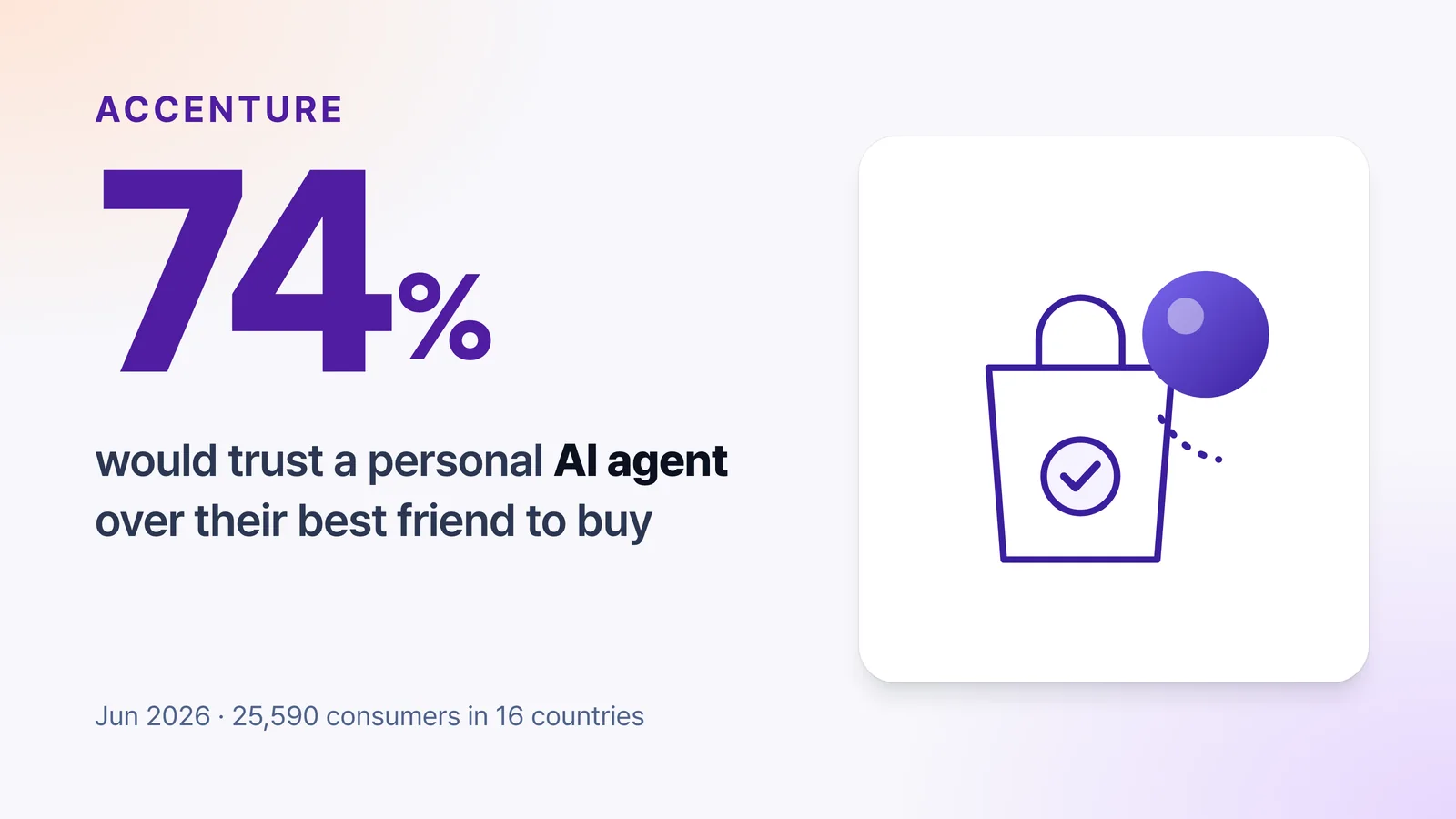
What does Accenture say AI agents change about how consumers shop?
Accenture Consumer Pulse Research 2026 (25,590 consumers, 16 countries): how far consumers would delegate to AI agents, how discovery is shifting, what to check.
-
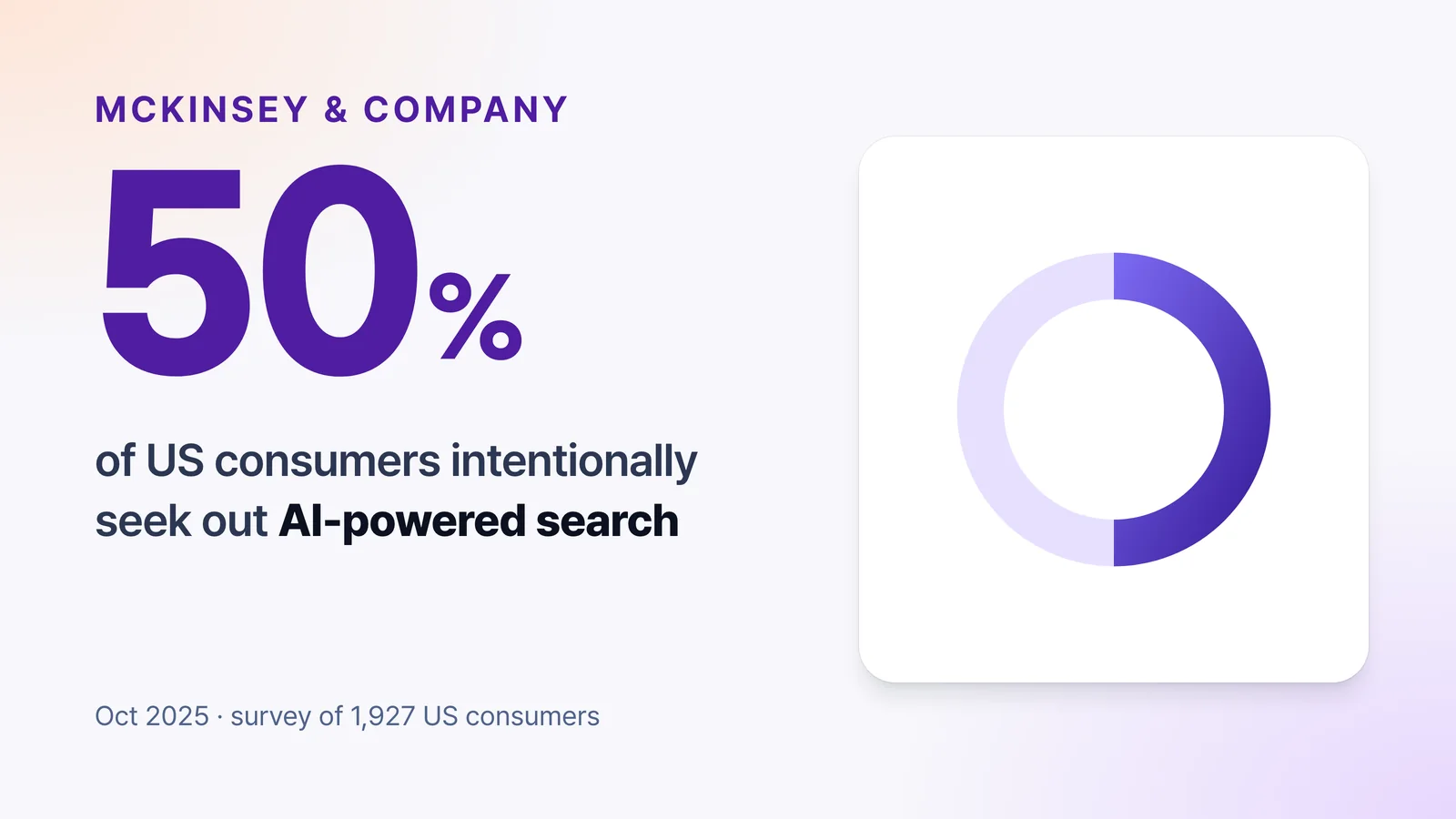
What does McKinsey say AI search changes?
McKinsey (October 2025) on how US consumers use AI search, brand sites' share of cited sources, the four GEO moves it recommends, and what to check.
-
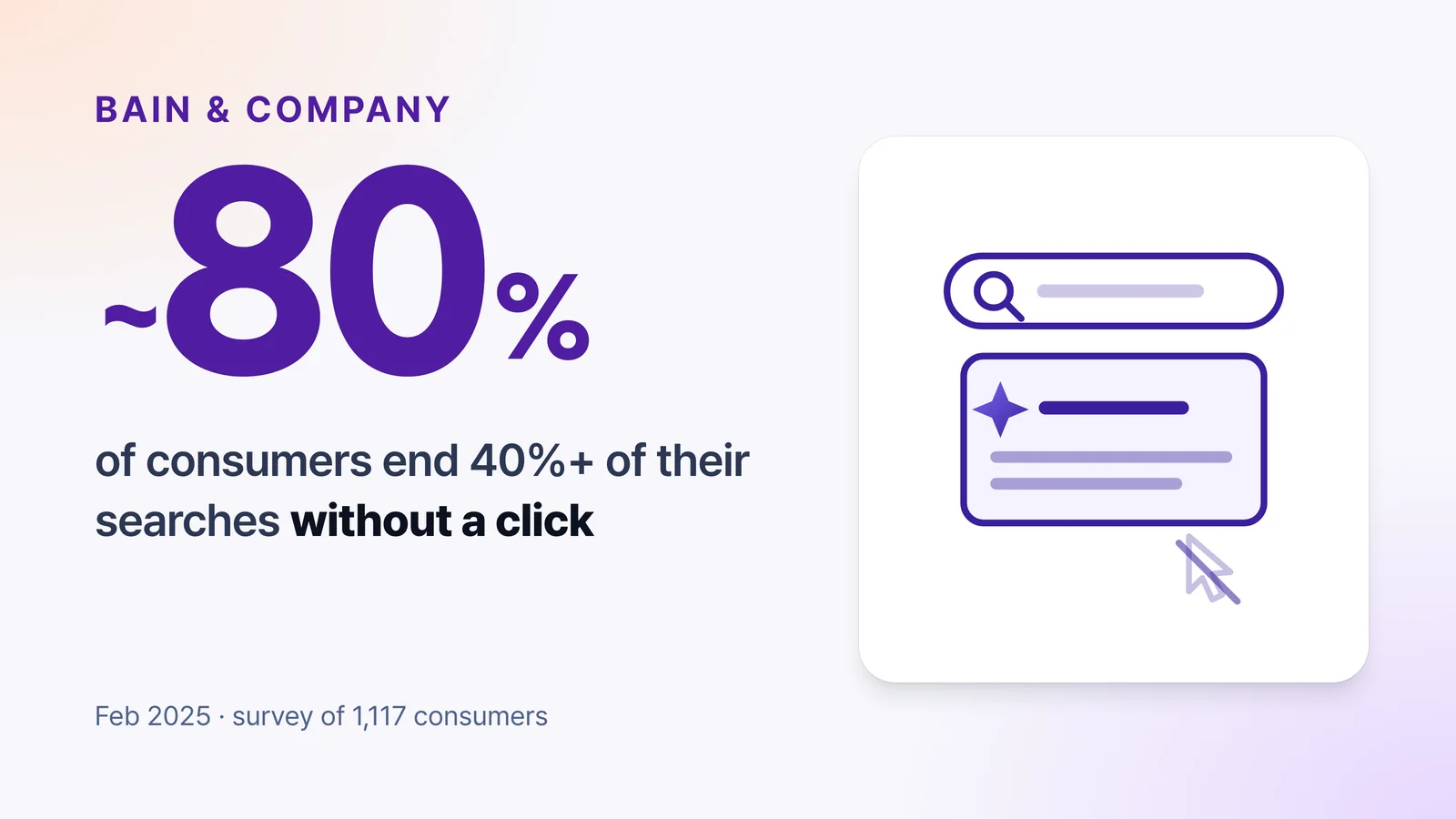
What does Bain say zero-click search changes for marketing?
Bain (February 2025) on the spread of zero-click search, what people use LLMs for, its advice on AI crawlability and new metrics, and what to check.
-
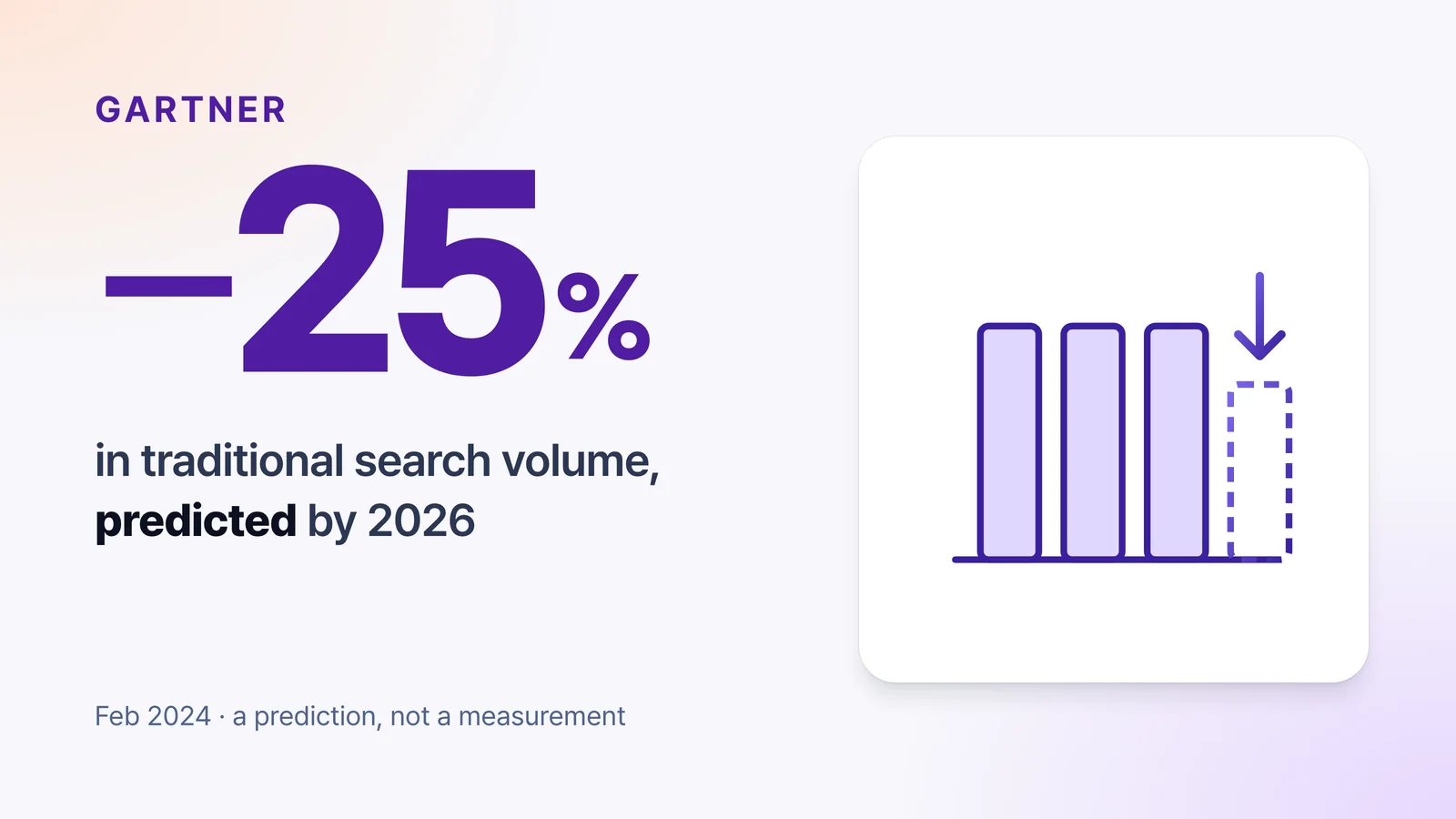
How much did Gartner predict AI chatbots would cut traditional search engine volume?
Gartner's February 2024 prediction of a 25% drop in traditional search engine volume by 2026: what it rests on, public counterpoints, and how to read it today.
PwC New Zealand: the AI-powered consumer
PwC New Zealand's "The AI-powered consumer" (July 21, 2026) surveyed 1,000 New Zealand consumers who had used AI for shopping in the past 12 months (Ipsos, May 12-19, 2026). 44% said AI had reduced their use of search engines when researching purchases, and for these respondents AI tools were the third most-used channel for product research, behind search engines and retailer websites or apps.
The sample is limited to consumers already using AI to shop, so these are not figures for all New Zealand consumers.
Read the original at PwC ↗How is your company described in AI answers?
WebforAI diagnoses whether a company site can be used and cited in AI answers, and prepares official information so AI can read and cite it accurately.
Frequently asked questions
Which global reports cover AI search, AEO and GEO?
This page compares reports from Deloitte, Boston Consulting Group, Accenture, McKinsey & Company, Bain & Company, Gartner on how AI search changes discovery, traffic and marketing. Each row links to a brief and to the original report.
What do these reports mean for a company website?
They suggest that ranking in search results is no longer the only goal. A company also needs official information that AI can read, trust and cite accurately, and a way to measure how it appears in AI answers.
Are the figures on this page AIO2O's own data?
No. Every figure comes from the original report linked in each row, with its publication date and sample where the report states them.
AIO2O · Last updated